


- :
- : 07-10-2025
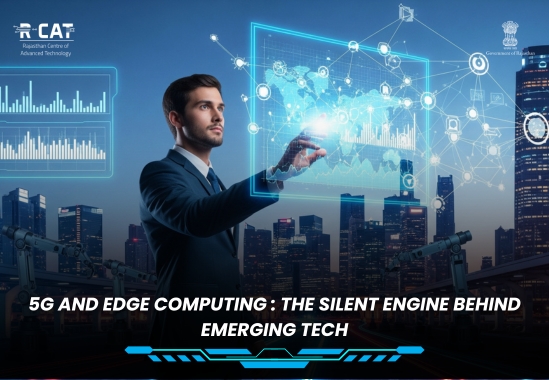
Imagine your phone streaming in perfect clarity during a live match, traffic lights changing in real time based on car flow, or drones delivering packages with second-delay responses. These aren’t sci-fi scenes. They’re being powered today by the combined force of 5G and edge computing.
Why This Matters for Students and Skill-Seekers
The day when you simply use Wi-Fi or mobile data is over. With 5G and edge computing, devices, systems, and people are connected in ways that demand new skills that go beyond just software or hardware.
India is rapidly rolling out 5G, and with it, “edge infrastructure” is becoming the backbone of the digital economy. For students, this means familiar tech (apps, networks) is evolving into real-time systems, smart devices, and live intelligence. Being aware of this shift is the first step to staying employable in tomorrow’s tech jobs.
What 5G + Edge Computing Actually Do
These are two separate technologies but when they work together, they unlock powerful possibilities:
● 5G brings ultra-fast connectivity and low latency. India alone has installed hundreds of thousands of 5G base stations and covered nearly all districts.
HYPERLINK "https://omdia.tech.informa.com/om135952/5g-in-india--2025?utm_source=chatgpt.com"
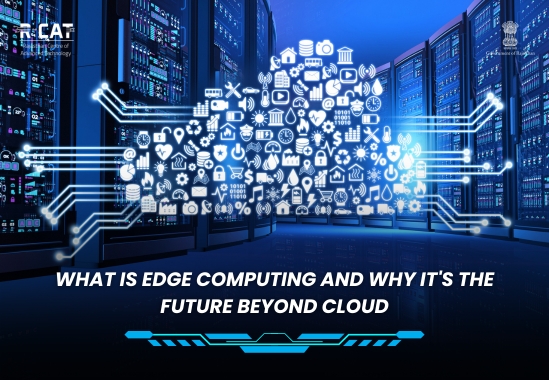
● Edge computing means processing data closer to where it’s generated (devices, sensors, local servers) rather than sending everything to far-away data centres.
HYPERLINK "https://www.indmall.in/faq/what-is-the-prediction-for-edge-computing-in-2025/?srsltid=AfmBOoohXnBJxbtjrTkhTinWLoeh5EUfFgaxg6Vm4jIklJVEN1LAfYWo&utm_source=chatgpt.com"
Together, they enable applications like:
● Smart factories: sensors detect faults and edge nodes to process data instantly.
● Real-time health monitoring: wearables send data to local edge processing for immediate alerts.
● Smart cities: traffic and utility sensors work with minimal delay for smoother operations.
Skills Students Should Focus On
You don’t need to be a network engineer to benefit but a few foundational ideas will keep you ahead:
● Latency awareness & connectivity basics: understand what “closer to the user” means in networks and why it matters.
● Local processing & device intelligence: knowing how data is being processed on devices or edge nodes rather than sent far away.
● IoT & sensor basics: many edge systems are built on sensors/devices gathering data in real time.
● Cloud-to-edge continuum: Recognizing how cloud, edge and devices form a chain,not separate silos.
● Real-time thinking: Designing or working with systems where delay matters (fractions of a second).
● Interdisciplinary mindset: Edge and 5G cut across domains health, logistics, manufacturing, smart cities so being able to connect tech with a domain helps.
How India’s Push is Shaping Workforce Needs
India’s digital ambitions rely heavily on network infrastructure and next-gen computer. With 5G rollout accelerating and edge data centres expanding, there’s a direct need for people who understand how systems integrate and function in this ecosystem.
For students in Rajasthan and beyond, this means that roles in connectivity, device systems, IoT, edge analytics, and network management are likely to grow—not just in big cities, but across regional centres too. Staying aware of this technology shift can make your skill-journey more aligned with the future job market.
🌱 What This Means for You Today
If you’re a student or someone looking to upskill:
● Start by exploring how networks and devices work together—watch simple explainers or try small device/sensor projects.
● Play with IoT kits, investigate latency/ping behaviour, and learn to think: “What happens if data is processed locally vs sent to the cloud?”
● Keep your eyes on areas where your field intersects with connectivity or devices. Whether you’re in design, marketing, logistics, healthcare or engineering—the ability to understand the infrastructure will add value.
● Remember: tomorrow’s jobs won’t just ask “Can you code?” but “Can you design systems that respond, connect and act in real time?”
In Rajasthan, Rajasthan Centre of Advanced Technology (R-CAT) provides learners with globally recognised certification courses and hands-on, real‐world learning experiences helping build confidence in these foundational future skills.
#5G #EdgeComputing #Connectivity #FutureSkills #DigitalIndia #TechCareers #IoT #EmergingTech #Rajasthan #RCAT