




- :
- : 21-04-2026
In today’s digital environment, data plays a central role in how systems operate, decisions are made, and services are delivered. From applications and platforms to public services and business systems, reliable data is essential for smooth functioning.
However, as systems become more complex, managing and maintaining data quality has become increasingly important. This is where the concept of data observability comes into focus.
What is Data Observability?
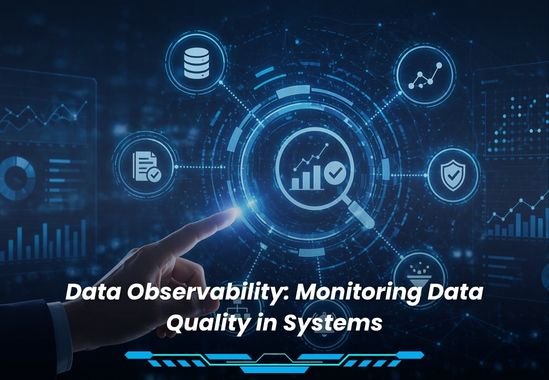
Data observability refers to the ability to monitor, track, and understand the health and quality of data within a system.
It helps answer key questions such as:
● Is the data accurate?
● Is it complete and up to date?
● Is it flowing correctly across systems?
In simple terms, data observability ensures that data can be trusted and used effectively.
Why Data Quality Matters
Data is used for decision-making, automation, and system operations. If the data is incorrect, incomplete, or delayed, it can affect outcomes and system performance.
Maintaining high data quality helps:
● Improve reliability of digital systems
● Support accurate decision-making
● Prevent errors in automated processes
● Build trust in digital platforms
This makes data observability an important part of modern digital infrastructure.
How Data Observability Works
Data observability involves continuously monitoring data as it moves through systems.
This includes:
● Tracking data flow across platforms
● Identifying missing or inconsistent data
● Detecting delays or errors in data pipelines
● Monitoring changes in data patterns
By observing these factors, systems can identify issues early and ensure smooth operation.
Where It Is Used
Data observability is relevant across various sectors:
Technology Platforms
Ensuring applications function correctly with accurate data.
Financial Systems
Maintaining accuracy in transactions and reporting.
Healthcare Systems
Monitoring patient data and records for reliability.
Public Digital Services
Ensuring service delivery systems operate with correct information.
These use cases highlight the importance of reliable data in everyday digital operations.
What This Means for Students
For students, data observability introduces an important concept in understanding modern digital systems.
It helps learners:
● Understand how data flows through systems
● Recognise the importance of data quality
● Learn how systems detect and manage errors
● Develop skills related to data monitoring and system reliability
This knowledge supports learning in areas such as data analytics, software systems, and digital infrastructure.
Looking Ahead
As digital systems continue to expand, the need for reliable and high-quality data will grow. Data observability provides a structured approach to ensuring that data remains accurate, complete, and usable.
For learners and future professionals, understanding data observability is an important step toward working with complex, data-driven systems and building reliable digital solutions.