




- :
- : 17-02-2026
Mobile devices have become central to how individuals access education, public services, financial systems, and digital communication platforms. As reliance on smartphones continues to grow, the way mobile applications and platforms are designed plays a critical role in ensuring inclusive and secure digital access.
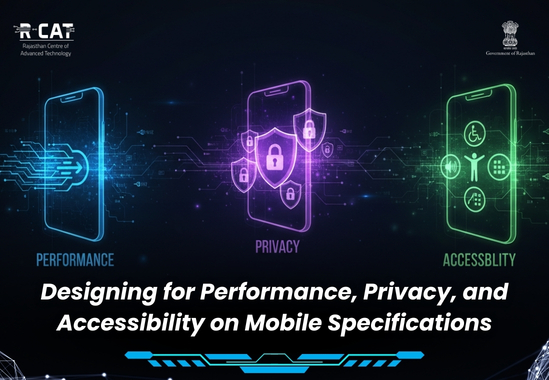
Designing around mobile specifications is no longer limited to technical compatibility. It now includes three essential pillars: performance, privacy, and accessibility.
Understanding Mobile Specifications in Digital Design
Mobile specifications refer to the technical and functional capabilities of mobile devices. These include aspects such as processing capacity, storage, display size, operating systems, and connectivity conditions.
Designing digital platforms with these specifications in mind ensures that applications function efficiently across a wide range of devices, including entry-level smartphones commonly used in large-scale public and educational ecosystems.
1. Designing for Performance
Performance determines how effectively a mobile platform operates under varying device and network conditions.
Key considerations include:
● Optimised loading times
● Efficient data usage
● Smooth navigation and responsiveness
● Compatibility with multiple device configurations
High-performance design ensures that digital services remain usable even in low-bandwidth environments. This is particularly important in supporting equitable access to e-learning, governance platforms, and public digital services.
2. Designing for Privacy
Mobile platforms frequently handle personal and sensitive user information. Ensuring privacy within mobile specifications is therefore essential.
Privacy-focused design involves:
● Secure data storage and transmission
● Minimal and purpose-driven data collection
● Transparent permission requests
● User control over shared information
Embedding privacy measures within mobile design strengthens user trust and aligns with broader data protection and digital governance frameworks.
3. Designing for Accessibility
Accessibility ensures that mobile platforms remain usable for individuals with diverse abilities, literacy levels, and technological familiarity.
Accessible mobile design includes:
● Clear and readable text interfaces
● Voice-enabled and screen-reader compatibility
● Multilingual options
● Simple navigation structures
Designing for accessibility supports inclusive digital participation and ensures that mobile technology benefits all sections of society.
Education and Capacity Building
Beyond technical implementation, awareness and education play a significant role in strengthening mobile design ecosystems.
Students, developers, and digital practitioners benefit from understanding:
● User-centric mobile design principles
● Responsible data handling practices
● Inclusive technology development approaches
Building knowledge in these areas supports the creation of mobile platforms that are efficient, secure, and socially responsive.
Conclusion
As mobile technologies continue to shape access to education, services, and digital participation, building awareness around performance, privacy, and accessibility becomes increasingly important. Strengthening these areas requires both technological design understanding and user capacity-building.
Through its continued focus on technology-enabled education and advanced skill development, R-CAT supports learners in building digital competencies, understanding emerging technologies, and preparing for responsible participation in evolving technology ecosystems.