




- :
- : 02-12-2025
Introduction
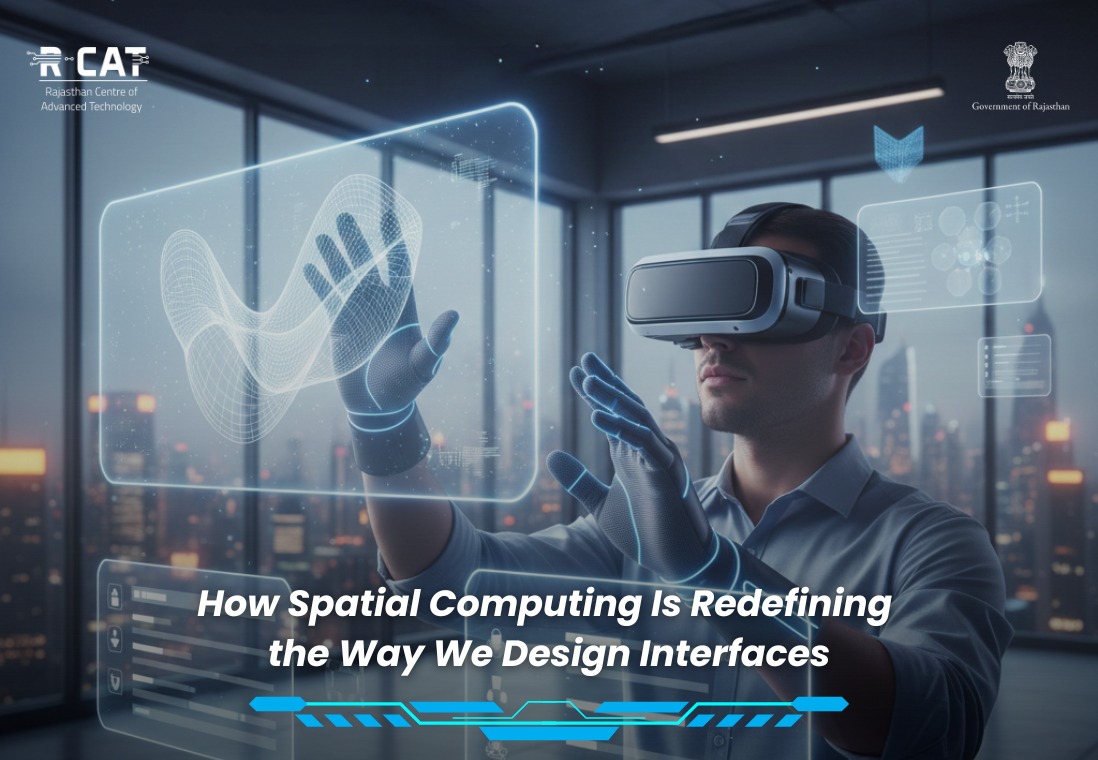
For many years, digital interfaces were limited to flat screens such as monitors and phones. Spatial computing is changing this model by blending digital information intothe physical world. It allows people to interact with content in three-dimensional space using natural gestures and movement. This shift is transforming how designers think about user experience, layouts, and interaction patterns.
What Is Spatial Computing?
Spatial computing brings together technologies such as augmented reality, virtual reality, mixed reality, spatial sensors, and 3D mapping. These systems create environments where digital objects behave like real ones. In simple terms, spatial computing helps people engage with digital content in the same way they interact with physical objects around them.
Why This Shift Matters for Interface Design
Traditional interfaces depend on flat screens and fixed layouts. Spatial computing introduces depth, motion, and environmental awareness. Designers now consider how users move, where digital elements appear in a room, how three-dimensional objects respond to actions, and how information changes based on perspective. This leads to more intuitive and natural experiences.
Core Principles of Spatial Interface Design
● Depth and Perspective
Interfaces exist in three-dimensional space, requiring careful hierarchy and viewing angles.
● Spatial Anchoring
Digital elements are placed at specific points in the user’s environment.
● Natural Interaction
People interact using gestures, eye movement, and voice instead of taps.
● Environmental Awareness
Systems respond to walls, lighting, and user movement for realism.
● Reduced Cognitive Load
Designers must keep environments clear and easy to navigate.
How Designers Are Reimagining User Experiences
Spatial computing is changing education, architecture, and data visualisation. Students can explore concepts in 3D, medical teams can train with realistic simulations, and designers can walk through full-scale digital spaces. Large datasets can be viewed as three-dimensional structures instead of flat dashboards.
The Skills Designers Need in a Spatial Future
Designers benefit from understanding depth, proximity, gesture-based interactions, and user behavior in physical spaces. They must learn to blend digital elements with real environments while maintaining clarity and usability. These skills build on the same foundations as traditional design: simplicity, readability, and user-centered thinking.
Why Spatial Computing Will Shape the Next Era of Digital Interaction
The shift from screens to spatial experiences has already begun. Industries are preparing for immersive and environment-aware digital systems. For learners, understanding spatial computing opens opportunities in interface design, human–computer interaction, 3D visualization, extended reality development, and digital product design. The interfaces of the future will not stay on screens but will exist in the space around us.