



- :
- : 19-11-2025
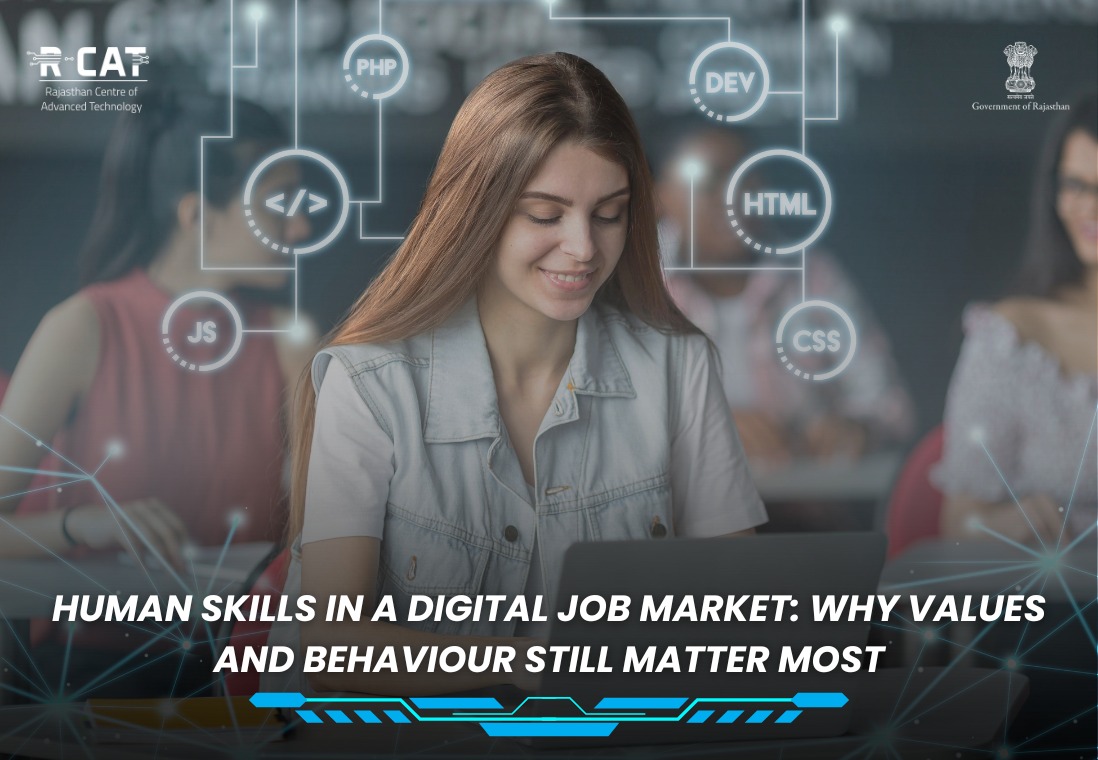
I. Introduction: Technology Changes, Character Endures
Automation, AI and digital platforms are reshaping how work is done, how teams collaborate, and how organisations deliver services. Job descriptions are changing, tools are evolving, and new roles are emerging every year.
Yet one element remains constant across this transformation: the way people think, behave, and work with others. Technical knowledge may qualify someone for a role, but it is their values and everyday behaviour that determine how far they grow, how much trust they earn, and how effectively they contribute.
This section explores why human skills – particularly values and behaviour – continue to play a central role in a digital job market.
II. Beyond Tools and Titles: What Employers Look For
Digital roles today often involve:
● Working across time zones and functions
● Handling sensitive information and complex systems
● Responding to rapid change and new expectations
In such an environment, organisations consistently look for people who are:
● Responsible – careful with compliances, commitments, data and resources
● Reliable – consistent in their quality of work and follow-through
● Respectful – able to collaborate with diverse teams
These qualities are not defined by software or programming languages. They emerge from values and behaviour – the human foundation beneath every technical skill.
III. Core Human Skills for a Digital Workplace
1. Values in Action
Values are not just words in a policy; they show up in everyday choices. In a digital context, this includes:
● Integrity – being honest about progress, challenges and errors
● Fairness – giving credit where it is due, and sharing opportunities transparently
● Respect for privacy – understanding that data represents real people and treating it accordingly
When individuals consistently act in line with these principles, they build trust with colleagues, partners, and stakeholders. This trust becomes a long-term professional asset, especially in roles involving data, automation, and decision support.
2. Behaviour in Collaboration
Digital work is rarely done alone. Cloud tools, online platforms and virtual meetings connect teams across locations and disciplines. Effective collaboration depends strongly on behaviour, such as:
● Clear communication – sharing information in a simple, structured and timely way
● Listening actively – understanding others’ perspectives before responding
● Constructive feedback – focusing on improvement rather than blame
Teams that combine strong technical capability with respectful, predictable behaviour can resolve issues faster, adapt to new requirements, and deliver more stable outcomes.
3. Mindset for Lifelong Learning
In a digital job market, tools and platforms will continue to change. A valuable human skill is the willingness to keep learning, which is reflected in behaviour such as:
● Asking questions without hesitation
● Seeking feedback and acting on it
● Exploring new methods instead of resisting change
This mindset enables professionals to stay relevant and confident, regardless of which technologies are currently in demand. It also fosters a culture that values experimentation, continuous learning, and ongoing improvement.
IV. How Human Skills Support Digital Roles
Across different sectors and job profiles, values and behaviour reinforce technical work in several ways:
● Better decision-making – ethical and thoughtful choices reduce risk and support sustainable growth
● Stronger customer and citizen experience – respectful communication and responsible handling of information build long-term trust
● Healthier work environments – positive behaviour helps teams manage pressure, deadlines and complexity more effectively
When organisations invest in digital infrastructure and advanced tools, they also benefit from people who can use these capabilities responsibly, collaboratively, and thoughtfully.
V. Building Human Skills Alongside Technical Skills
Developing human skills is an ongoing process. Some practical ways to strengthen them include:
● Treating every project, assignment or internship as an opportunity to practice reliability and clear communication
● Reflecting regularly on questions like:
○ Did I keep my commitments today?
○ Did I listen carefully before responding?
○ Did my actions align with my core values?
● Participating in group activities, discussions and presentations that require both subject knowledge and teamwork
Over time, these small, consistent practices shape a professional identity that is recognised not only for competence, but also for character.
VI. Conclusion: The Human Anchor in a Digital World
The digital job market will keep evolving with new tools, roles, and expectations. Amid this constant change, human skills provide stability.
Values guide decisions when rules are unclear.
Behaviour shapes how teams' function under pressure.
A learning mindset keeps careers moving forward.
By nurturing these qualities alongside technical knowledge, individuals become more than just users of technology – they become trusted contributors to a fair, responsible and future-ready digital ecosystem.