



- :
- : 09-12-2025
Introduction
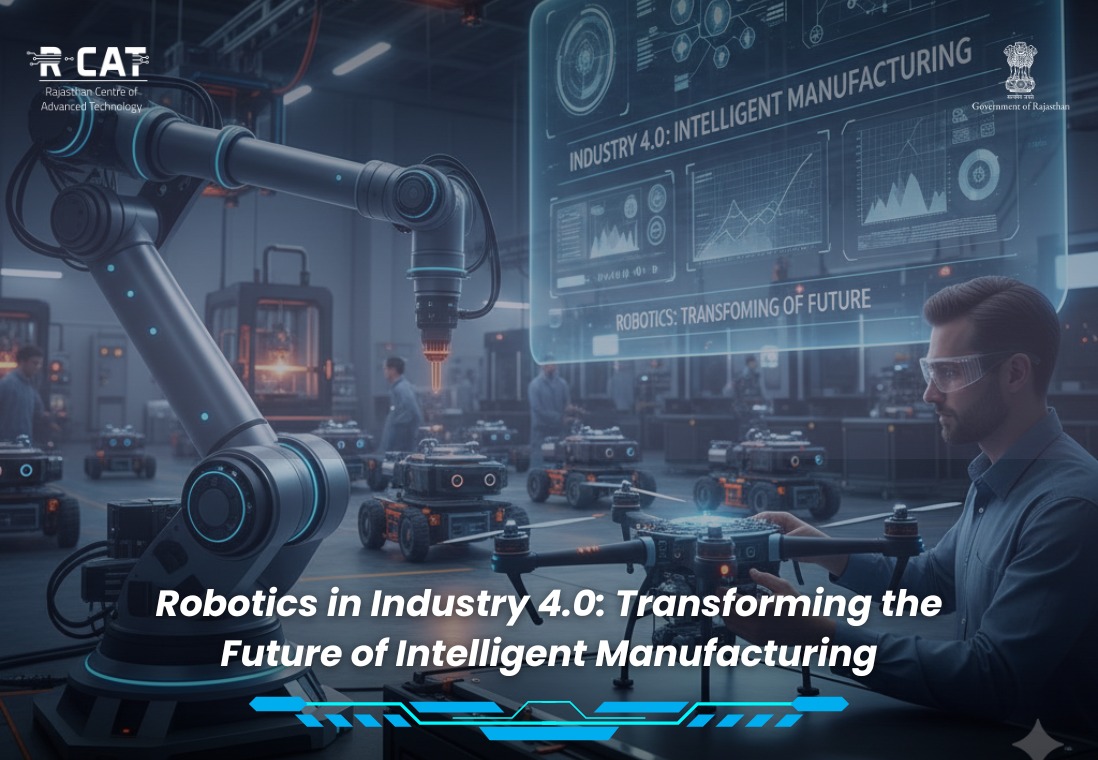
Industry 4.0 represents a new era of connected, intelligent, and autonomous systems. At the center of this transformation stands robotics, not as a replacement for human capability, but as a powerful extension of it.
In traditional manufacturing, robots followed fixed, repetitive tasks. Industry 4.0 has changed the very meaning of automation. Today’s robots are smart, collaborative, data-driven, and capable of adapting to real-time scenarios.
This transformation is redefining how industries produce, optimize, and scale.
What Makes Robotics Essential to Industry 4.0
Industry 4.0 brings automation together with IoT, AI, machine learning, big data, and cloud computing. Robotics have become the physical arm of this digital ecosystem.
Modern robots can learn from data, adjust to changing workflows, operate safely around humans, self-diagnose errors, and communicate with other machines.
This intelligence and adaptability make robotics one of the strongest pillars of smart manufacturing.
Key Roles of Robotics in Industry 4.0
Smart Automation
Robots now adapt to dynamic production needs. They switch tasks, optimize routes, and adjust speed based on real-time conditions.
Human Robot Collaboration
Collaborative robots make manufacturing safer and more efficient. They assist humans, manage repetitive or hazardous tasks, and reduce physical strain on workers.
Higher Precision and Quality Control
Robots equipped with sensors, AI, and computer vision deliver exceptional accuracy in assembly, inspection, welding, and packaging.
Predictive Maintenance
Robotic systems can predict component failures before they occur, reducing downtime and operational costs.
Flexible and Scalable Production
Robots in Industry 4.0 scale seamlessly with demand, adjusting to changes in product type, design, or volume.
How Robotics Creates Smarter Factories
A True Industry 4.0 factory is one where machines communicate, share data, and adjust operations with minimal human intervention.
Robots enable autonomous material handling, intelligent warehousing, connected manufacturing lines, real-time inventory updates, and automated quality checks.
This results in faster, safer, and more efficient production environments.
Industries Rapidly Adopting Robotics
Automotive
Electronics
Pharmaceuticals
Food Processing
Logistics and Warehousing
Metals and Heavy Manufacturing
Energy and Utilities
These industries rely on robotics for efficiency, precision, consistency, and global competitiveness.
The Skills Behind the Future
As robotics becomes central to manufacturing, new skillsets are emerging. These include robotics programming, automation design, AI and machine learning integration, IoT system management, data-driven maintenance, and human-robot interface management.
Industry 4.0 requires professionals who understand how robotics connect with software, data, and intelligent decision-making.
The Road Ahead
Robotics in Industry 4.0 continues to evolve, but its direction is clear.
Factories will become more autonomous, supply chains more resilient, and production systems more responsive.
Robots will not replace humans. They will redefine the nature of work. Human creativity and decision-making will combine with robotic speed, accuracy, and intelligence to shape the future of manufacturing.
Industry 4.0 is not just about technology. It is about creating smarter, safer, and more sustainable ways to build the world.