



- :
- : 14-04-2026
What if everyday objects could sense, understand, and respond to their surroundings?
From automatic lights to fitness trackers and smart traffic systems, many of the technologies we use today rely on one key component—smart sensors.
For students and learners, this shows how small devices are playing a big role in building connected and intelligent environments.
From Basic Sensors to Smart Systems
Earlier, sensors were used to simply detect changes like temperature, motion, or light.
They could collect data, but they could not do much beyond that.
Today, sensors have become smarter.
They can not only detect changes but also process information, communicate with other systems, and trigger actions automatically.
What Are Smart Sensors?
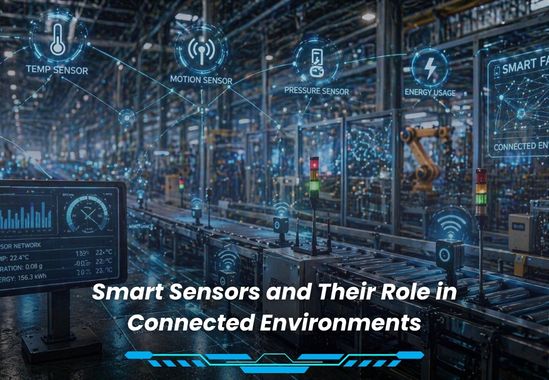
Smart sensors are devices that can sense environmental conditions, process data, and communicate with other systems.
Unlike traditional sensors, they combine:
Data collection
Basic processing capability
Connectivity
In simple terms, smart sensors can observe, analyse, and respond.
Where Smart Sensors Are Used
Smart sensors are part of many modern systems:
Smart Homes
Sensors control lighting, temperature, and security systems.
Healthcare Devices
Wearables track health indicators like heart rate and activity levels.
Smart Cities
Traffic systems, waste management, and public lighting use sensors for better efficiency.
Industrial Systems
Machines use sensors to monitor performance and detect issues early.
These applications show how connected environments are built using sensor-based systems.
Why They Matter
Smart sensors bring several advantages:
They enable real-time monitoring of systems.
They support automation and faster decision-making.
They improve efficiency and resource management.
They reduce the need for manual intervention.
These benefits make them essential for modern digital infrastructure.
What This Means for Students
For students, smart sensors highlight how different technologies come together, including:
Internet of Things (IoT)
Embedded systems
Data processing
Automation
Understanding these systems helps learners see how real-world technology works beyond theory.
It also prepares them to work on systems that are connected, responsive, and data-driven.
Looking Ahead
As more devices become connected, smart sensors will continue to play a key role in building intelligent environments.
From homes and industries to cities and public systems, sensors will help make systems more efficient and responsive.
For learners, understanding smart sensors is a step toward understanding how the digital world around them is being built.